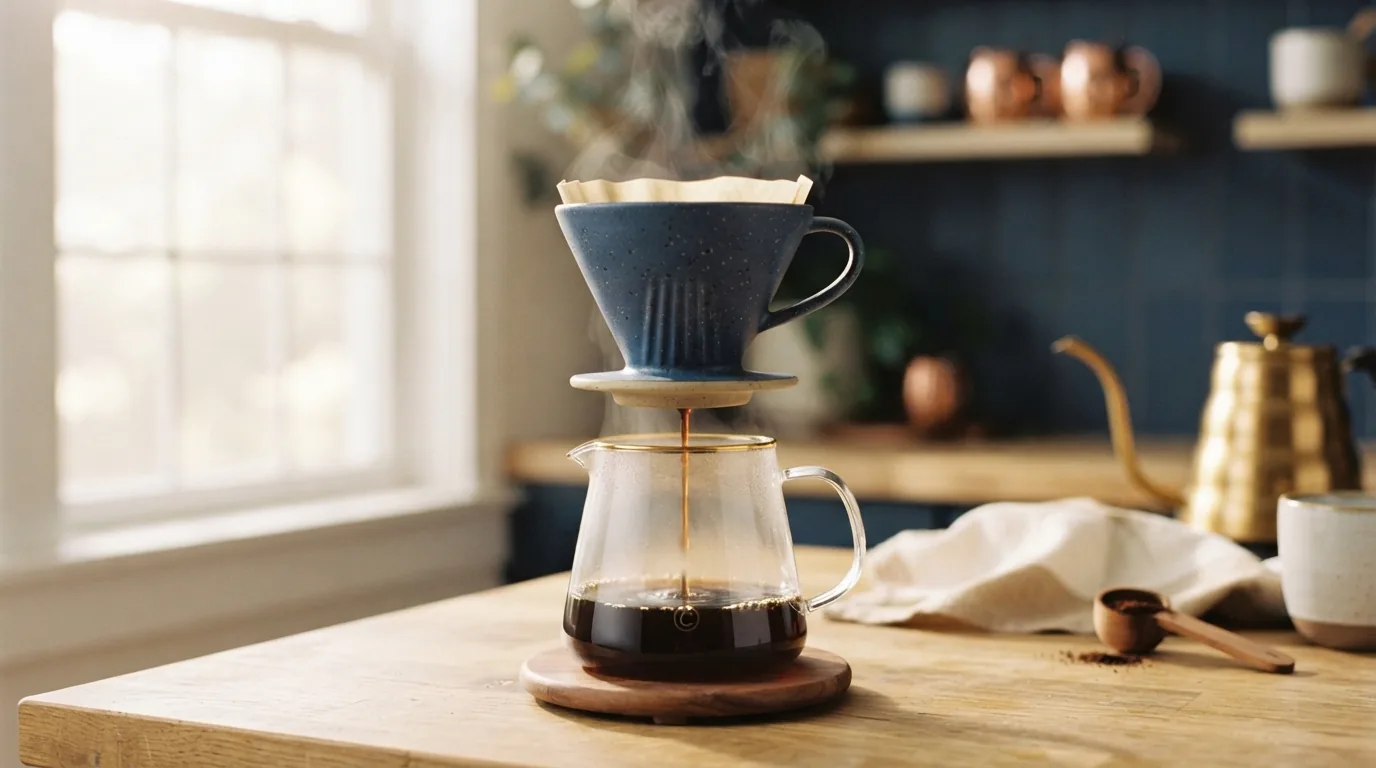
Ask most people what changes the flavor of their pour-over and they'll say the beans, the grind, maybe the water. Almost nobody says the filter, and yet swapping a paper filter for a metal one, or bleached for unbleached, or the wrong shape for the right one, changes the cup more than switching to a different bag of beans from the same roaster usually does.
The One Mechanical Fact That Explains Everything Here
A filter's pore size determines how much of the coffee's natural oil and fine sediment makes it into your cup. Paper traps almost all of it, which is why paper-filtered coffee tastes cleaner and lighter-bodied, with more separation between individual flavor notes. Metal mesh has holes too large to catch that oil and sediment, so more of it passes straight through, producing a heavier, murkier cup closer in texture to a French press. Neither result is a flaw; it's just what each material is built to do.
The Everyday Paper Filter

Hario V60 Paper Coffee Filter, Size 02, 100-Count
Amazon listing: Hario V60 Paper Coffee Filter, Size 02, Natural, 100ct
The standard cone-shaped paper filter for V60 drippers, bleached white, consistent thickness
There's not much to overthink about a paper filter, which is exactly the point. The Hario V60 filter is sized and shaped specifically for V60 drippers, cone-shaped with the ribbed fold pattern that keeps it from collapsing flat against the dripper's walls, and a box this size covers roughly three months of daily single-cup brewing. At well under a nickel per cup, it's one of the few genuine non-decisions in a home coffee setup.
A Step Up for Clarity
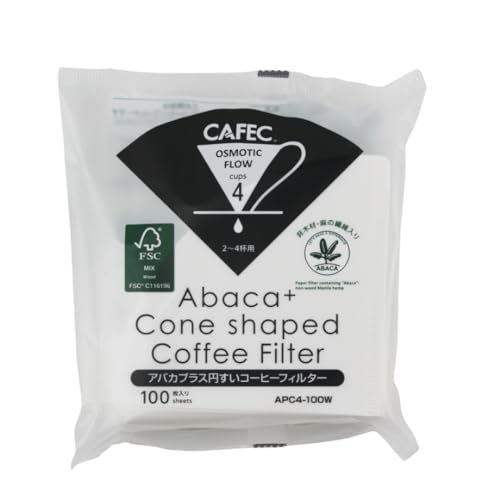
CAFEC Abaca Coffee Paper Filter
Amazon listing: CAFEC Abaca+ 100-Pack Cone-shaped V60 02 1 to 4 Cup Disposable Pour-Over Drip Coffee Paper Filter made of…
Made from abaca fiber instead of standard wood pulp, thinner and faster-draining for a cleaner, brighter cup
CAFEC makes its filters from abaca fiber, a banana-plant relative, rather than the wood pulp standard paper filters use. Abaca fiber makes a thinner, faster-draining sheet, which shortens contact time slightly and tends to produce a brighter, more clearly defined cup with specialty-grade single-origin coffee specifically, the kind of bean where a subtle floral or citrus note is worth fighting for.
Skipping Paper Altogether

Able Kone Reusable Stainless Steel Coffee Filter
Amazon listing: Able KONE: Reusable Stainless Steel Coffee Filter Compatible with Chemex
Precision-etched stainless steel cone compatible with Chemex, Ratio Eight and several drip machines
The Able Kone swaps paper out entirely for a precision-etched stainless steel cone that fits inside a Chemex, a Ratio Eight, and several other drip machines. Zero filters end up in the trash per cup, permanently, which is the real appeal here over any brand comparison. The tradeoff is the fuller, oilier cup that comes standard with metal filtration; if you already prefer French press body, this is the pour-over equivalent.
“A filter doesn't just strain coffee. It decides how much of the bean's oil and body actually makes it into your cup, and that's a bigger flavor lever than most people realize.”
Bleached, Unbleached, and a Myth Worth Retiring
Bright white bleached filters and natural brown unbleached ones perform identically once rinsed. The real difference is a faint papery taste unbleached filters carry more of if you skip rinsing, plus the color itself. Modern filters, bleached or not, use oxygen-based bleaching rather than the chlorine processes that drove old health concerns, so that worry doesn't really apply to what's sold today. A ten-second rinse with hot water before brewing clears the papery taste from either type.
Shape Is Not Universal
A V60 filter folded into a Kalita Wave, or a flat-bottom filter forced into a cone dripper, gaps at the seams and channels water unevenly around the coffee bed instead of through it, which shows up as an uneven, sometimes sour extraction. Filters are not interchangeable across dripper shapes regardless of what a box's generic labeling implies. Our best pour-over drippers guide covers which filter shape each dripper style actually needs.
Does the Reusable Filter Actually Pay Off
A 100-count box of V60 filters running around three months of daily brewing means paper is genuinely cheap in isolation. The Able Kone's higher upfront cost isn't about beating that math on price per cup; it pays back over roughly a year of daily use specifically for anyone trying to cut the ongoing waste stream and the recurring task of restocking, not because paper filters were ever expensive to begin with.
Pairing With the Rest of Your Setup
A filter only matters as much as what's going through it. Our best whole bean coffee guide covers beans worth brewing through any of these, and our coffee bean storage guide covers keeping them fresh once you've bought them.