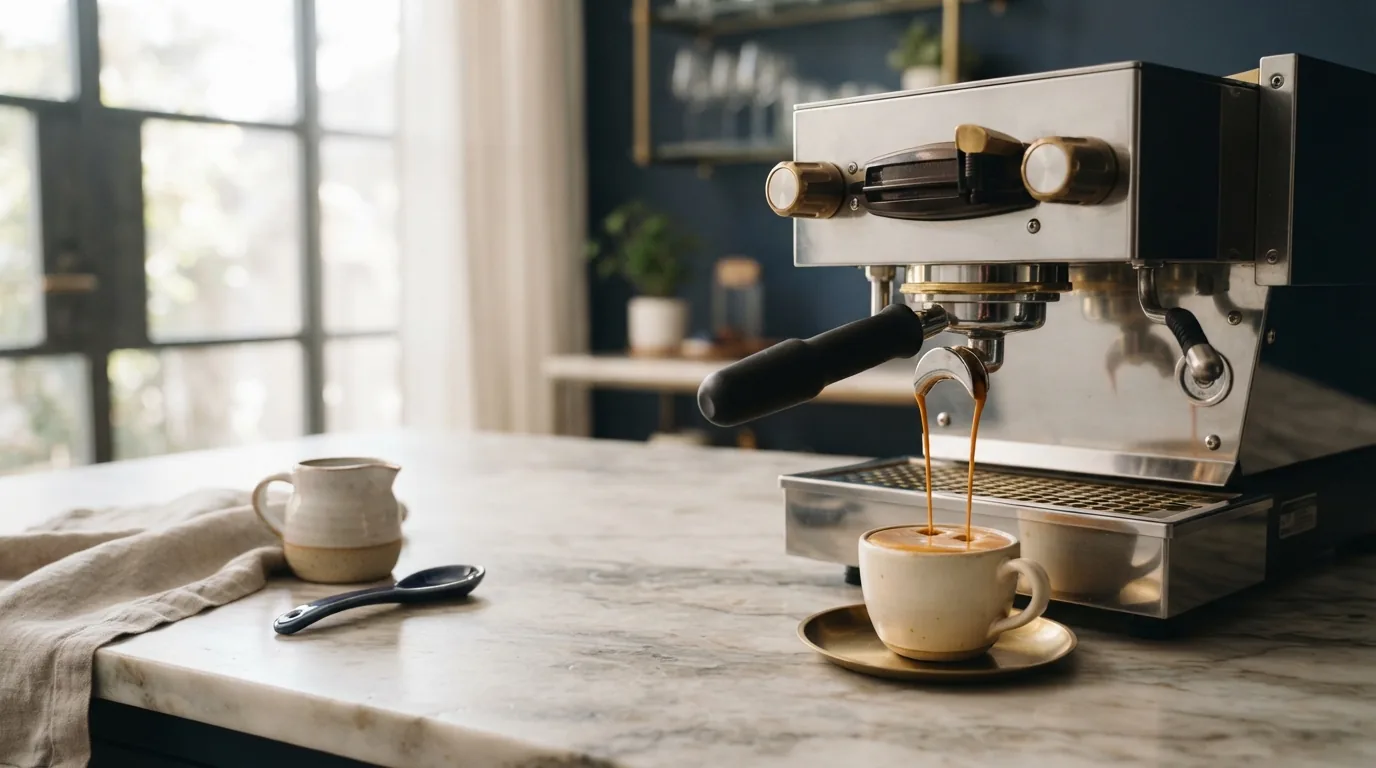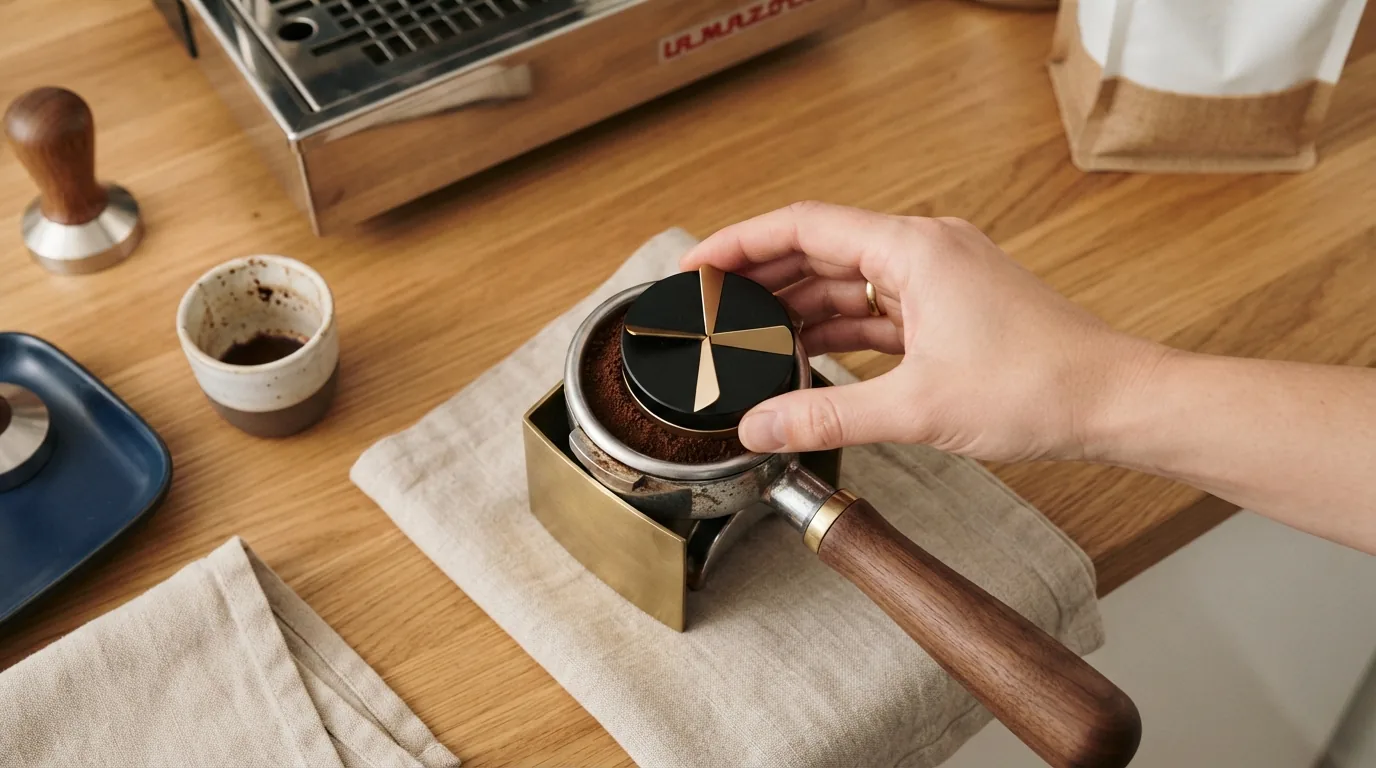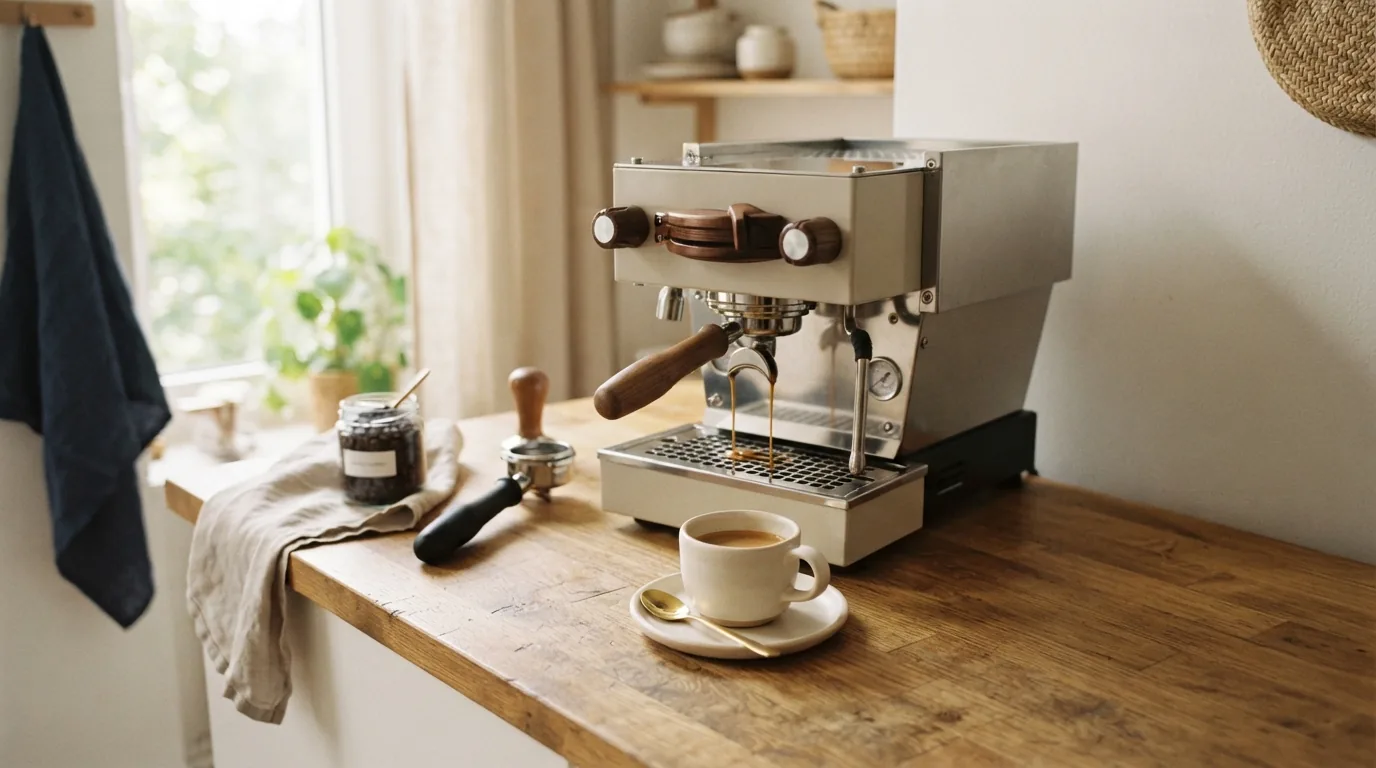
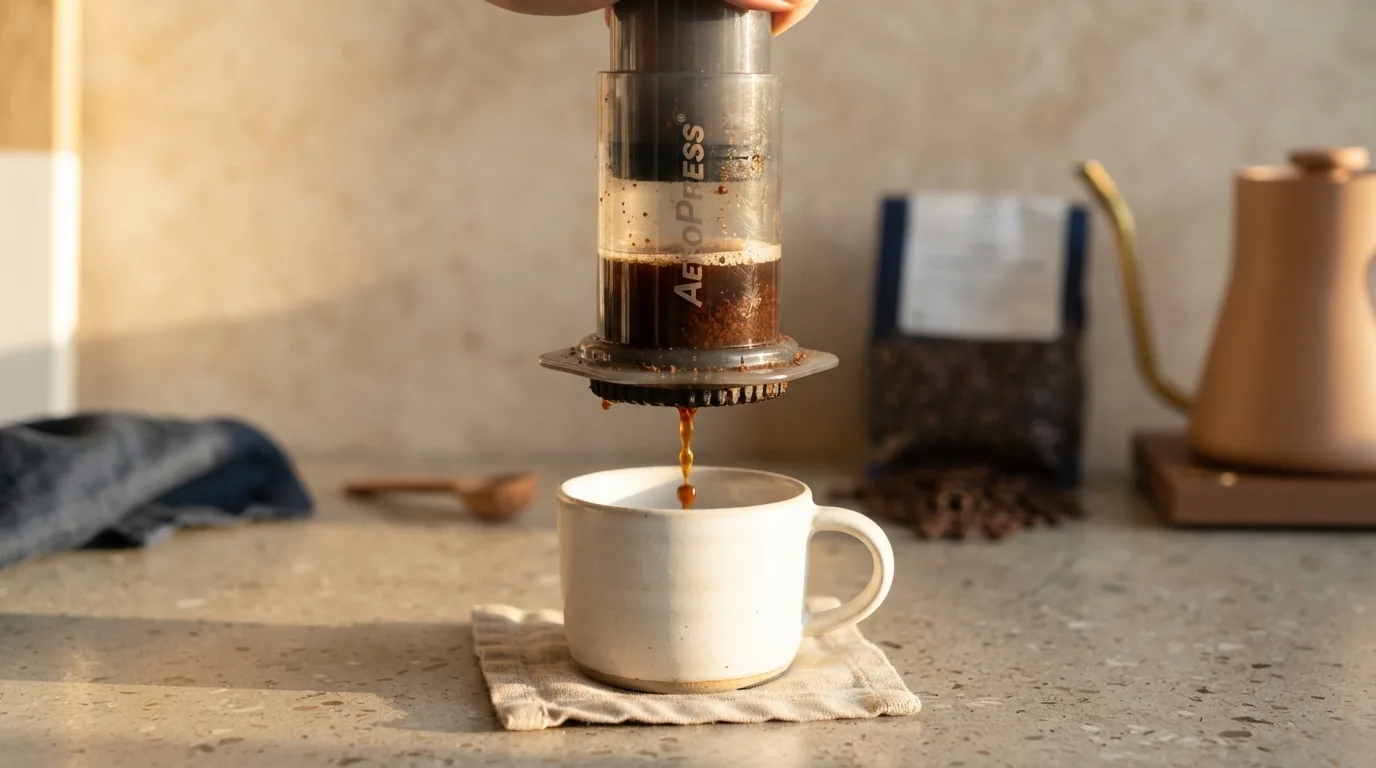
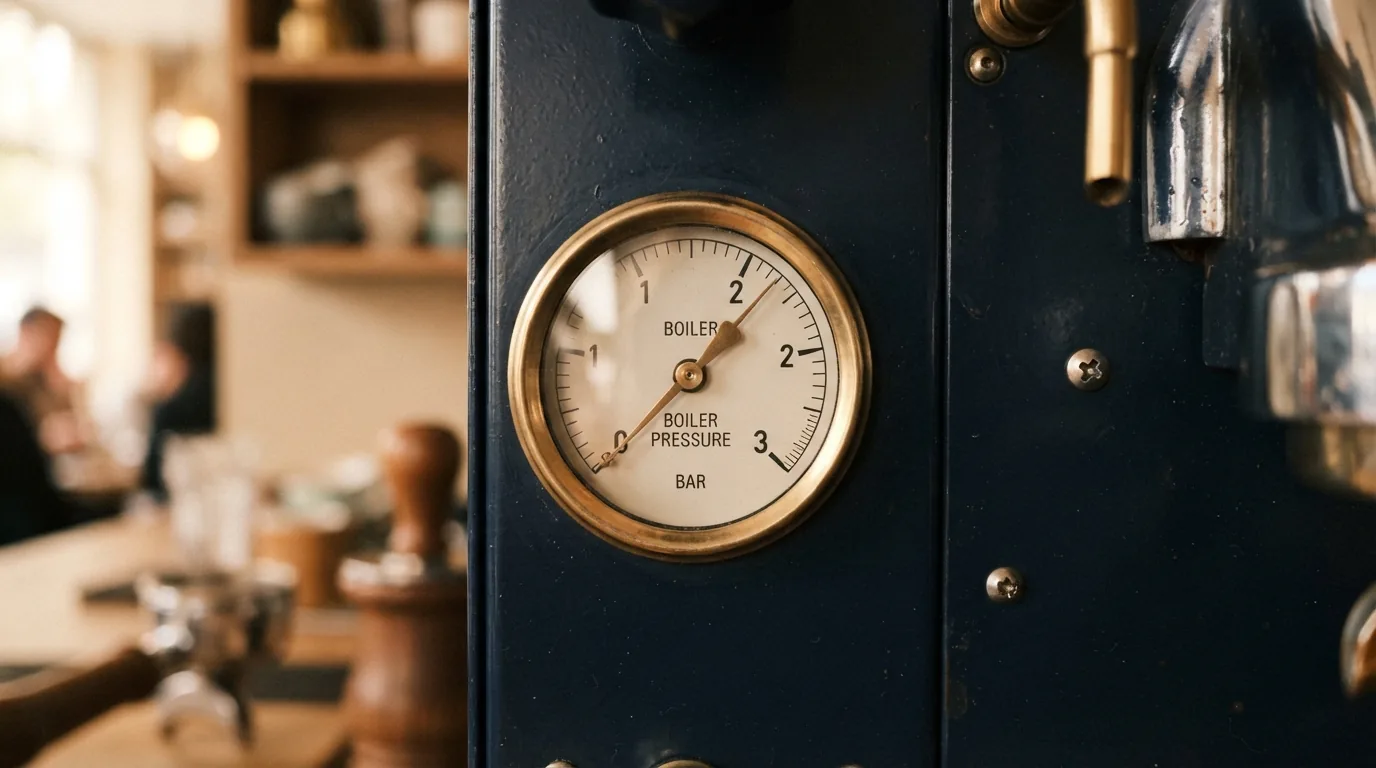
Picture two identical espresso machines, bought the same day. One gets descaled on a set schedule. The other doesn't, because its owner assumes filtered water and light daily use means it can wait. Eighteen months later, the first machine still hits temperature in seconds. The second takes noticeably longer to warm up, its steam wand has lost real power, and a technician would likely find a boiler partially lined with limescale. Nothing broke. It just scaled up, gradually enough that nobody noticed day to day.
Where the Scale Actually Comes From
Tap water carries dissolved minerals, mainly calcium and magnesium, and the combined concentration of those minerals is what "water hardness" measures. Heat that water inside a boiler and a portion of those minerals drops out of solution, bonding to whatever metal surface is nearby as solid limescale, chemically the same chalky buildup you've probably seen ring the inside of an electric kettle. Every machine that heats water does this to some degree; the only variable is how fast. Softer water forms it slowly. Harder water, common across large parts of the Midwest and Southwest, can leave a visible mark on a daily-use machine within a couple of months. A carbon filter reduces the mineral load and buys time, but it doesn't eliminate the problem outright, since even filtered and bottled water still carries some dissolved minerals.
Reading the Warning Signs
Machines with a digital interface, the Breville Barista Express Impress among them, will usually flag a descale reminder automatically once enough brew cycles have accumulated. Simpler machines won't tell you anything, so watch for it yourself: flow through the group head slowing down, shot temperature drifting between pulls, a steam wand that's noticeably weaker than it used to be, or a chalky white residue building up around the water tank fitting. As a baseline, plan on descaling every one to three months if you're on hard water and brewing daily, tightening that interval if your water is particularly hard, and don't wait for the machine to tell you if you already know your tap water is a problem.
Gathering What You Need
Reach for a descaling solution built for espresso machines rather than improvising with plain vinegar. Vinegar is meaningfully more acidic than a purpose-made solution, which can be harsh on some internal seals over repeated use, and its smell is notoriously stubborn to fully rinse out of narrow lines. A dedicated descaler costs little enough that there's no real upside to cutting corners here.

Durgol Swiss Espresso Decalcifier
Amazon listing: Durgol Swiss Espresso Machine Decalcifier/Descaler Solution, 4 Count
Works across brands, safe on internal seals and gaskets
The Process, Start to Finish
- Pull any water filter cartridge and rinse the tank empty. Descaling solution will damage most charcoal filter cartridges, so it has to come out first.
- Mix the solution exactly to spec. Follow the product's stated water-to-solution ratio rather than eyeballing it; concentration matters more here than with most cleaning products.
- Cycle it through the group head in short bursts rather than one long pull, giving the solution time to sit and work inside the boiler between passes. Use the machine's dedicated descale program if it has one. It's timed for exactly this.
- Cycle it through the steam wand too. Scale accumulates there independently of the brew boiler, and skipping this step leaves half the problem untouched.
- Empty the tank, rinse thoroughly, and refill with clean water.
- Flush three to four full tanks of clean water through both the group head and steam wand before pulling a shot you actually plan to drink. A soapy-tasting first cup after descaling is almost always a rinsing problem, not a flaw in the descaling solution itself.
“A machine that takes five extra minutes to reach temperature compared to a year ago isn't wearing out. It's scaled up.”
Notes for Specific Machines
Breville machines, the Barista Express Impress and Barista Pro included, use their own branded descaling solution matched to their internal components, and the LCD walks you through a guided cycle step by step when you select it. That guided process is worth using over an improvised manual approach whenever your machine offers it.
Breville The Descaler
Formulated specifically for Breville espresso machines and kettles
Fully manual machines, like the Gaggia Classic Pro or the Flair 58, have no guided cycle to lean on, so pace yourself through the group head and steam wand by hand, and err on the side of longer dwell time, following the label's full recommended soak period before flushing.
Letting Your Water Set the Calendar
If you're on well water or a municipal supply known for hardness, descale by a fixed calendar reminder instead of waiting for symptoms to appear. Flow rate is a lagging indicator. By the time it's visibly dropped, temperature stability has usually already been compromised for weeks. Switching to filtered or moderately mineralized bottled water meaningfully stretches that interval and is worth the small ongoing cost for a daily-use machine. Our water quality guide covers what to actually look for in a filter.
For more on how water chemistry shapes flavor as directly as scale buildup shapes hardware longevity, browse our craft and science collection, or see the full machine collection for care guidance specific to your model.