
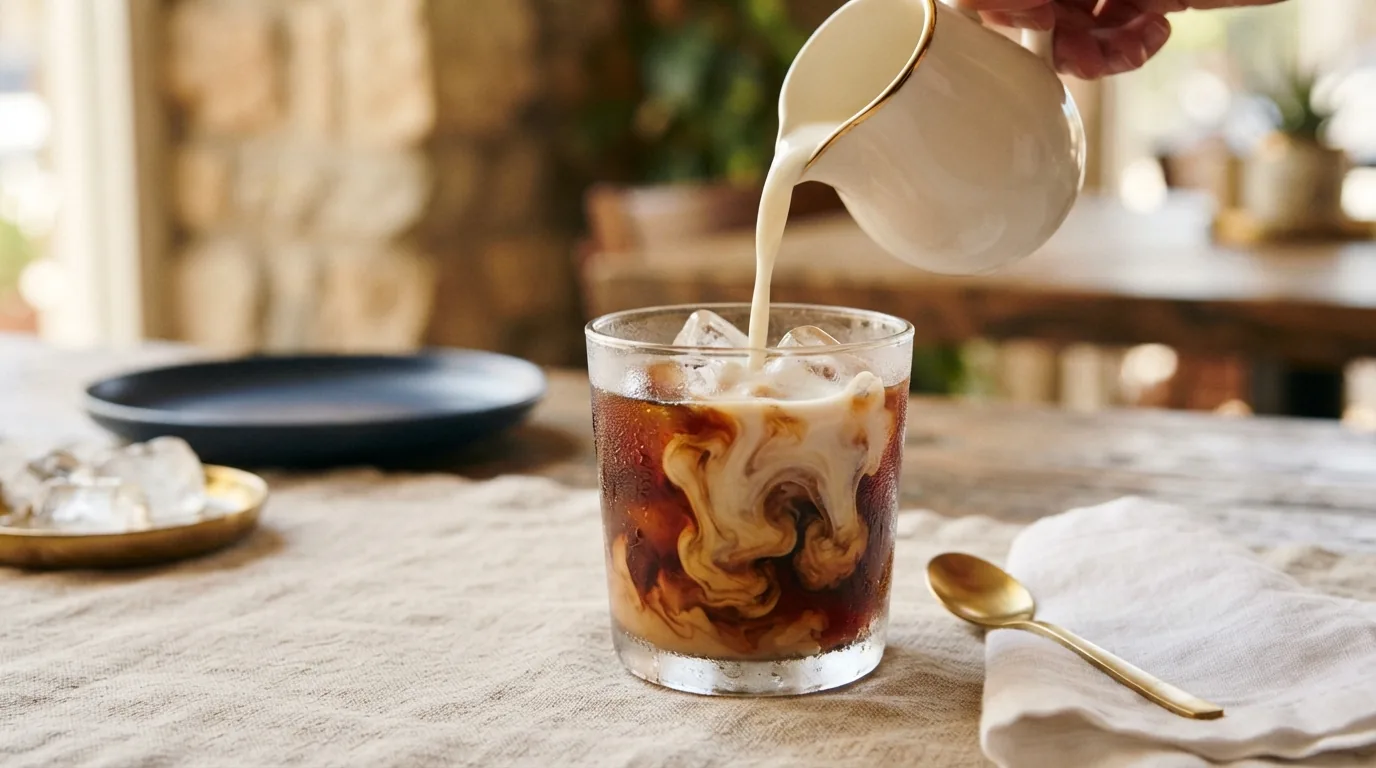
Somewhere in the last few years, the insulated tumbler stopped being a practical accessory and became a genuine collectible, the kind of thing people own in five colors without much shame about it. That's fine, colors are colors. But buried under the aesthetics is a real engineering question worth answering honestly before you buy one specifically for coffee: these tumblers were designed around cold drinks first, and hot coffee performance is a secondary result of that design, not the primary goal.
Vacuum Insulation, in Plain Terms
Every tumbler worth buying uses the same underlying trick: two layers of stainless steel with a vacuum sealed between them. Heat moves by molecules physically bumping into each other and passing energy along, and a vacuum simply doesn't have molecules there to do that job. That's why a good vacuum-walled tumbler beats a single-wall cup or a thick plastic bottle by a wide margin, and why the steel itself, not any coating or color, is doing the real insulating work.
The Lid Is Doing More Than People Assume
Here's the detail that actually separates good tumblers from great ones for hot coffee specifically, and it has nothing to do with the steel: it's the lid. A fully sealed lid keeps a still pocket of insulated air sitting right above the liquid. A straw opening or a flip-spout, by contrast, gives warm air a constant, if narrow, path to the outside world. Over several hours, that steady leak matters more to how warm your coffee stays than almost anything else about the tumbler's construction.
Two Picks, One Honest Tradeoff
Stanley Quencher H2.0 FlowState, 40oz: The One Everyone Already Owns
There's a reason this specific tumbler is behind the entire recent boom, and it isn't purely marketing: the vacuum insulation is genuinely solid, the handle is wide and comfortable to carry, and the straw lid is easy to drink from one-handed while driving or working. At 40oz, it holds more than most people need for one coffee, which in practice means it doubles as an all-day vessel people refill with whatever they're drinking next rather than a dedicated coffee cup.

Stanley Quencher H2.0 FlowState Tumbler, 40oz
Amazon listing: STANLEY 40 oz.
Double-wall vacuum insulated stainless steel, wide-mouth straw lid, comfort-grip handle
Owala FreeSip, 32oz: The One With Two Ways to Drink
The FreeSip's whole identity is its lid: a straw built into one side, a push-button spout on the other, so you can switch between slow sipping and fast chugging without swapping bottles. It's a genuinely clever bit of industrial design. It also means the FreeSip has, if anything, slightly more places for warm air to escape than a single-opening straw lid, since it's built around two openings instead of one.
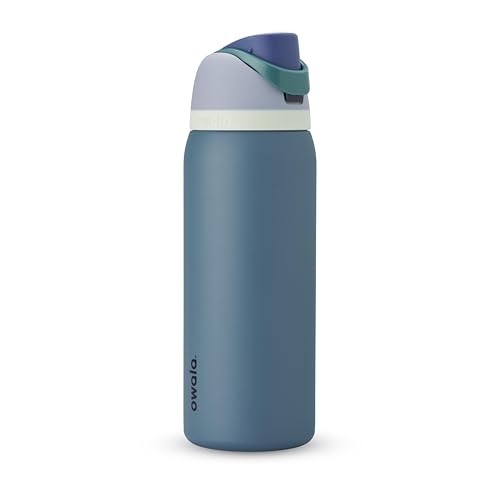
Owala FreeSip Insulated Stainless Steel Water Bottle, 32oz
Amazon listing: Owala FreeSip Stainless Steel Water Bottle 32 oz Denim
Double-wall vacuum insulation, dual straw-and-spout lid, one-handed push-button opening
“Call these cold-drink tumblers that also happen to hold coffee, not coffee tumblers that also happen to look good. The distinction matters the moment hot retention becomes your actual priority.”
So How Hot Does Coffee Actually Stay?
In independent testing, an open dual-opening lid like the FreeSip's measurably loses more heat over time than a fully sealed single-opening design, even when both bottles use comparable double-wall vacuum steel underneath. Practically, that means coffee in either tumbler above stays pleasantly warm for a few hours rather than staying near scalding for a full workday. If all-day, still-hot-at-5pm performance is genuinely the goal, a sealed screw-top or flip-lid travel mug will beat both of these on that one metric specifically, straw convenience aside.
None of that makes either tumbler a bad purchase, it just means they're built for a different job than a dedicated thermos. If you finish your coffee within the first hour or two and want one vessel that also handles iced drinks brilliantly for the rest of the day, both are excellent. If hot retention for eight straight hours is the actual requirement, shop a sealed-lid travel mug instead of either of these.
Sizing: Bigger Isn't Automatically Better
A 40oz tumbler is genuinely more than most people need for one cup of straight black coffee. The real use case for that much volume is usually a full day's worth of iced coffee or cold brew concentrate, diluted and refilled as the day goes on, rather than a single serving. If you only ever drink one coffee-sized portion at a time, a 20oz or 24oz version of either model is easier to hold one-handed and a more sensible size than the flagship 32-to-40oz tumblers reviewed here.
Keeping the Lid Clean Matters More Than the Body
The body of either tumbler is durable stainless steel and generally safe on a dishwasher's top rack, though it's worth checking the specific listing since finishes vary by colorway. The lid is where these actually get dirty: straw interiors and spout valves trap coffee residue in places a dishwasher doesn't always fully reach, and hand washing those components regularly keeps mold and off-flavors from building up somewhere you can't easily see.
If iced coffee is the bigger half of your routine, pair either tumbler with our nitro cold brew guide for something genuinely café-quality to fill it with, and our milk frother guide if you want real microfoam on a cold drink rather than straight black.